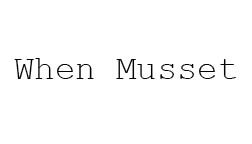
I’ve been obsessed with Jean-Philippe
Touissant’s books lately. I first discovered his book, “camera”
quite by accident at the local library this fall, and fell in love with his
work. Touissant is a Belgian writer and filmmaker, who started writing a month
after he read “Crime and Punishment” by Dostoyevsky. His has a kind of humor
and his observations on mundane occurrences are funny, very funny at times but
surprisingly insightful with a touch of nostalgia. After “Camera,” I kept on
reading his other books, “Making Love,” “The Bathroom,” “Monsieur,” and now I’m
reading “Television.” I’m just about a half way through. In this book, the
protagonist, an academic on sabbatical in Berlin, is planning to write a
groundbreaking study on Titian, but unable to write after two words. He blames
his obsession with watching TV for this, so he stops watching TV. But he’s
constantly haunted by television. He prepares himself for a perfect state for
writing by going for swimming, walking, reading, laying down on the grass at
the park (completely naked too), and thinking about his monograph all the time
while doing all these activities. And he seems to be in the perpetual state for
“ready to write.” But he still cannot go beyond two words, “When Musset.” Then,
he thinks if writing is your goal, then not writing is at least as important as
writing. But he quickly tells us not to overdo it (because he thinks that’s the
one little risk he might be running into these days.)

I stopped watching TV probably six or seven years ago. I don’t own TV.
I was glad to get rid of it. So, TV is never a problem, but I spend a lot of
time preparing myself for that mental state and clarity one needs (or hopes to
have) in the studio. I practice yoga, going to gym and sweat, and dancing (yes,
dancing could be a necessary preparation for studio work too.) Walking is
always a good way to get your mind clear, but I tend to need more rigorous
activities for that, so I prefer hiking. Doodling could be my greatest excuse
for not making any drawings or greatest preparation for making drawings. It
seems all these activities must take place to get myself “ready to work” in the
studio. I wouldn’t go so far to say the same thing as the protagonist says, but
isn’t that what we secretly think? Organizing and clearing the desk, trying to
clear our heads from all sorts of physical activities or meditation, or even
just by doing nothing (call that a relaxation,) so that we can do work, a real
work seem like already a work sometime?
Since clarity doesn’t usually stay with us too long, we all need to
constantly work at getting and maintaining one’s clarity. At least that’s how I
feel.

When I was at the Blue Mountain Center last year, I went
swimming in the lake everyday. Seeing the surface of clear water as my body
glided through the water, and my body being embraced by the cold water made me
feel as if my body and soul were cleansed. I was renewed each time, and
ready to work. The Eagle Lake was my energy renewal center.
Last month, I’ve abandoned a drawing after working on it for a couple
of months. I seemed to be in the mud for too long.
After walking away from that drawing, I felt so much better (as if I
walked out of a bad relationship,) and I wanted to congratulate myself.
“Congratulations! Now, you can start a new drawing!” But since then, I seem to
be in this perpetual “preparation” state. No, I’m not spending all my time
going for swimming, walking, doing yoga and dancing (well, dancing I do a bit
too much, and I do practice yoga time to time, but I’ve been actually working
on something.) I’m making these little drawings one after another, and I can’t
seem to stop it. I wonder what these small drawings mean to me. I’m not sure if
this means that I need to go swimming.
The Eagle Lake is located in the Adirondacks in New York, and it’s at
least 6 hours away. And it’s December. The lake is probably frozen by now.
 |
| New drawings - no titles yet. |
 |
| Close-up |
 |
| work in progress |